
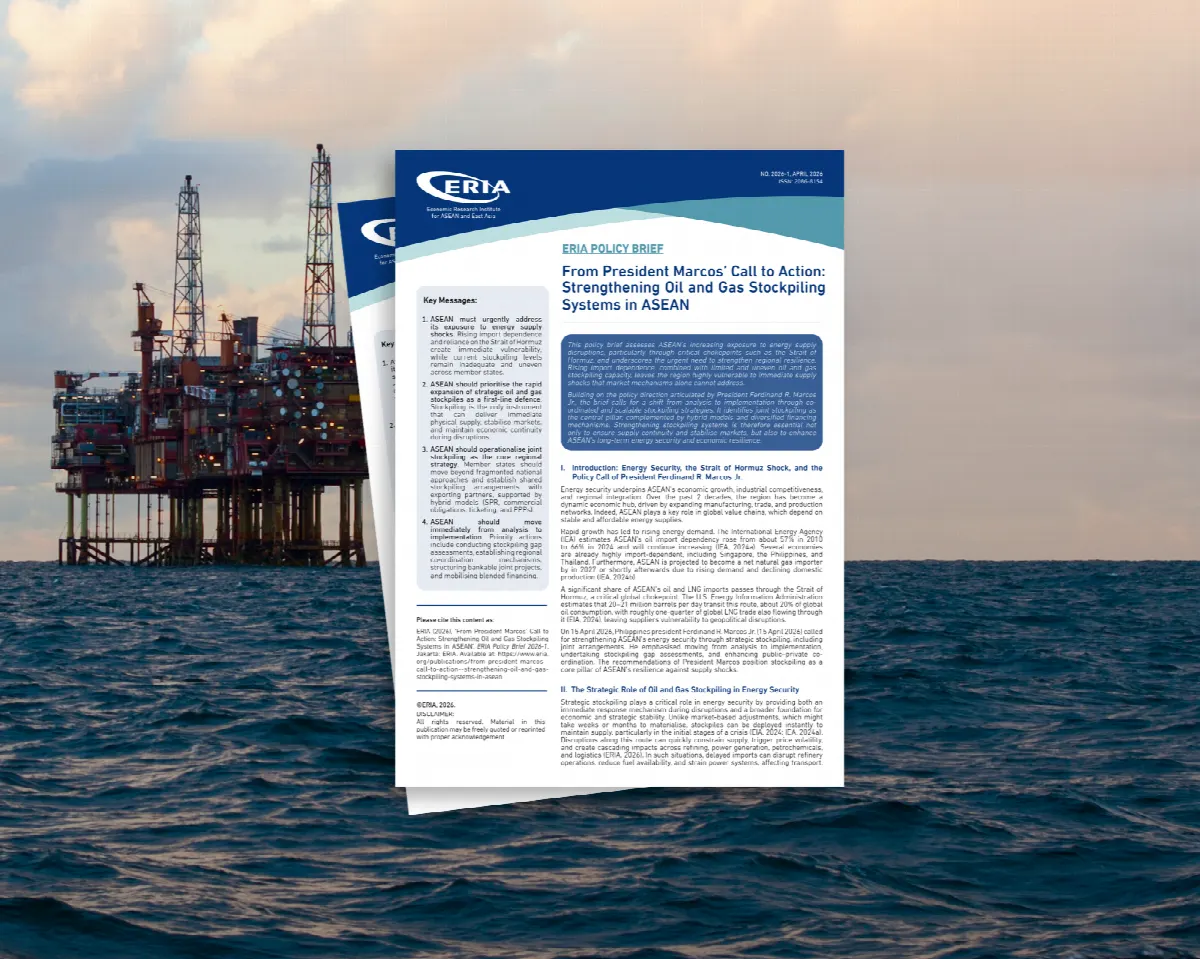
ERIA Policy Brief Calls for Stronger ASEAN Action on Oil and Gas Stockpiling
ERIA has released a new policy brief titled From President Marcos’ Call to Action: Strengthening Oil and Gas Stockpiling Systems in ASEAN, highlighting the region’s growing vulnerability to energy supply disruptions, particularly through critical chokepoints such as the Strait of Hormuz.
Read More: ERIA Policy Brief Calls for Stronger ASEAN Action on Oil and Gas Stockpiling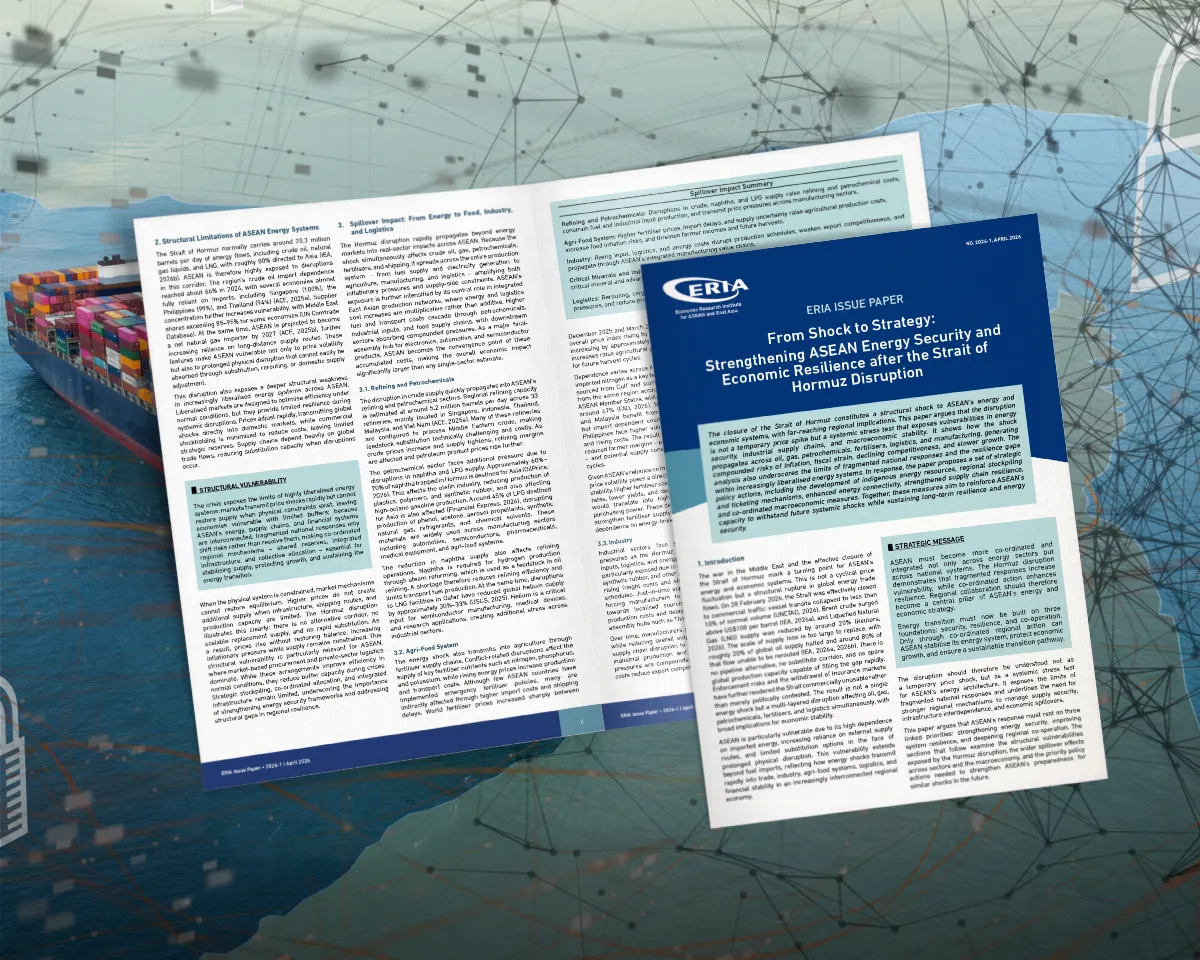
ERIA Issue Paper Calls for Stronger Regional Action on Energy Security Following Strait of Hormuz Disruption
ERIA has released a new Issue Paper titled From Shock to Strategy: Strengthening ASEAN Energy Security and Economic Resilience after the Strait of Hormuz Disruption, highlighting the far-reaching implications of the February 2026 closure of the Strait of Hormuz for ASEAN economies.
Read More: ERIA Issue Paper Calls for Stronger Regional Action on Energy Security Following Strait of Hormuz Disruption
ERIA’s Support for ASEAN Chairmanship 2026
ERIA is committed to supporting ASEAN’s 2026 Chairmanship by providing research, policy insights, and regional cooperation to advance ASEAN’s shared priorities and strengthen its path towards a more integrated, resilient, and sustainable future.
Read More: ERIA’s Support for ASEAN Chairmanship 2026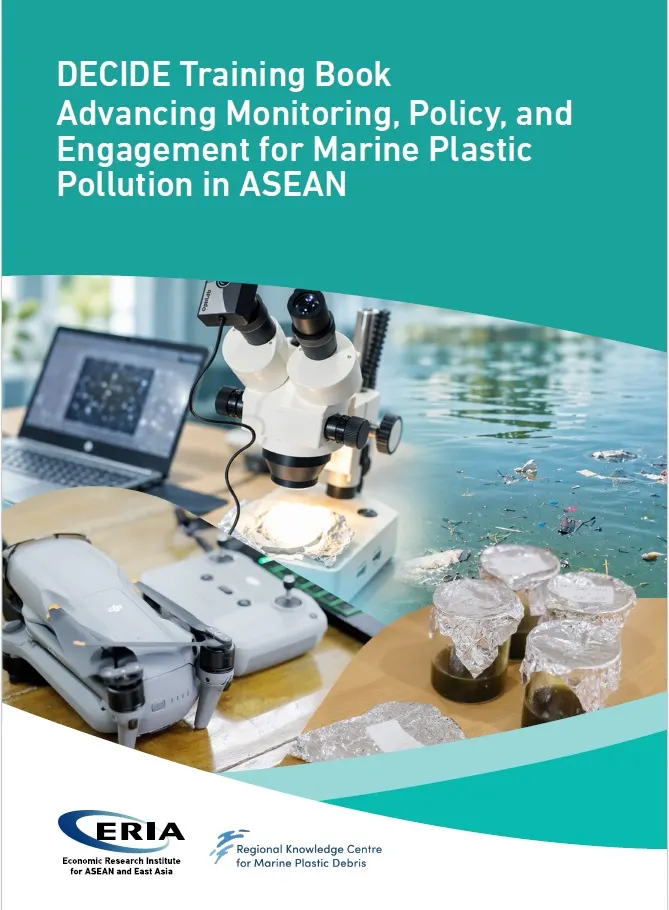
DECIDE Training Book Advancing Monitoring, Policy, and Engagement for Marine Plastic Pollution in ASEAN
Plastic pollution remains a critical challenge for ASEAN, requiring harmonised monitoring, robust data, and stronger collaboration between policymakers and researchers. Developed by ERIA’s Regional Knowledge Centre for Marine Plastic Debris under the Data and Evidence to Catalyse Informed Decision-making and Engagement (DECIDE) initiative, the DECIDE Training Book: Advancing Monitoring, Policy, and Engagement for Plastic
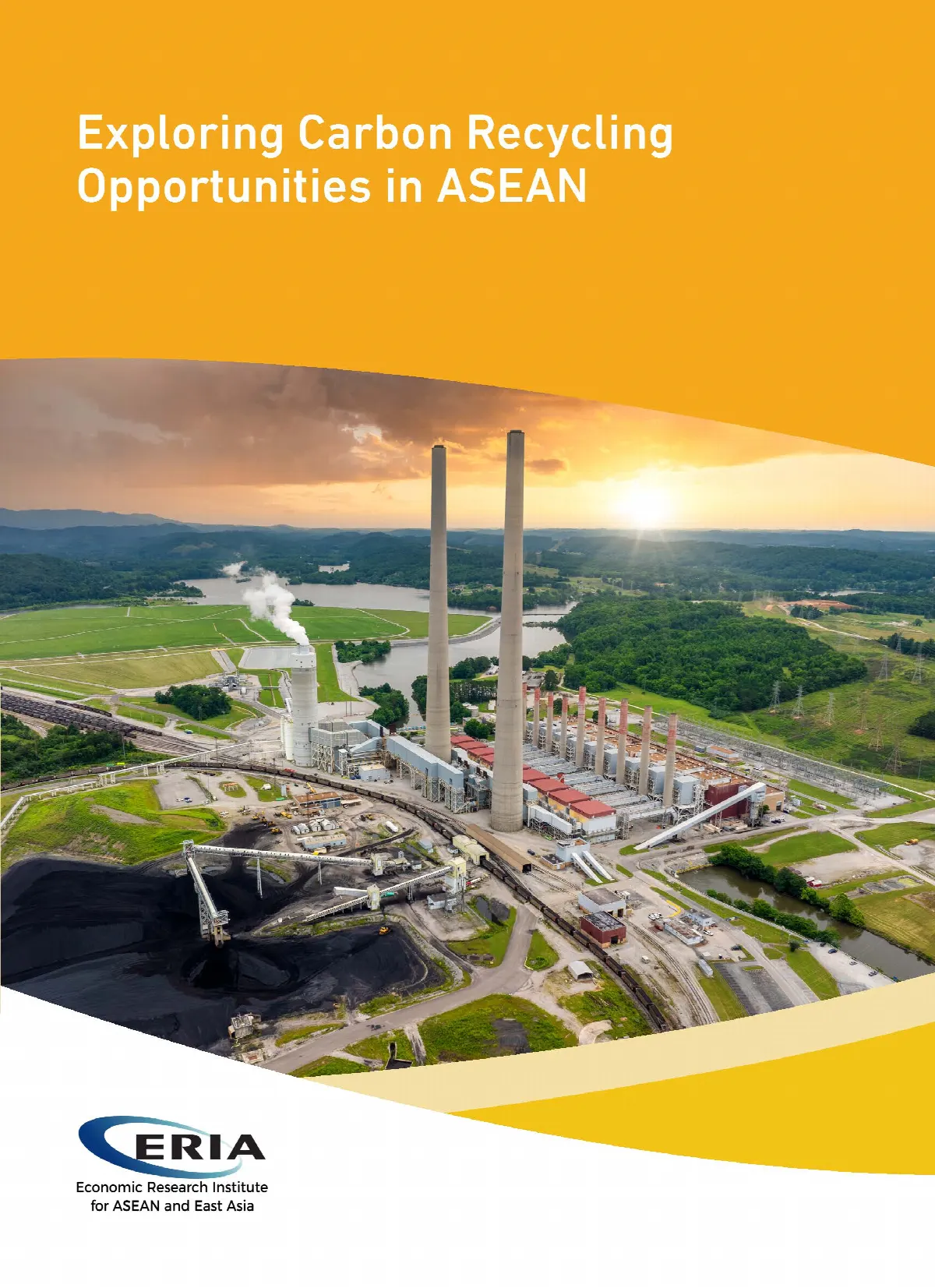
Exploring Carbon Recycling Opportunities in ASEAN
This collaborative study applies a combination of desktop research, technology assessment, benchmarking, comparative analysis, and expert judgement to examine technological, policy and regulatory, and socio-technical aspects of carbon capture and utilisation (CCU). It assesses policies and strategic documents from various countries to identify insights into the broader application of CCU technologies and pathways for accelerating
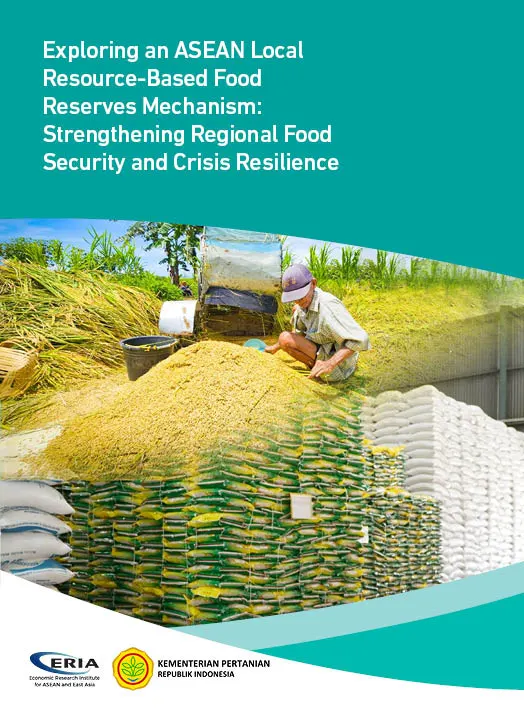
Exploring an ASEAN Local Resource-Based Food Reserves Mechanism: Strengthening Regional Food Security and Crisis Resilience
This book synthesises the findings of a preliminary study exploring an ASEAN Local Resource-Based Food Reserve (LRBFR) mechanism, proposed under the 2023 ASEAN Leaders' Declaration. Drawing on case studies from all ASEAN Member States, the book examines existing national food reserve systems, lessons from the implementation of the ASEAN Plus Three Emergency Rice Reserve (APTERR), and
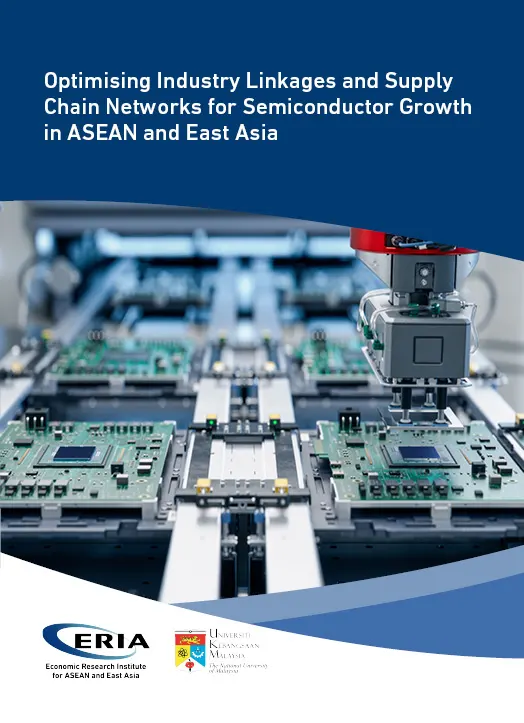
Optimising Industry Linkages and Supply Chain Networks for Semiconductor Growth in ASEAN and East Asia
The semiconductor industry has emerged as a strategic pillar of the global economy, driven by the rapid growth of digital technologies, artificial intelligence, electric vehicles, and advanced manufacturing. At the same time, recent geopolitical tensions and supply chain disruptions have exposed the vulnerabilities of highly concentrated semiconductor production networks, prompting renewed efforts to diversify and
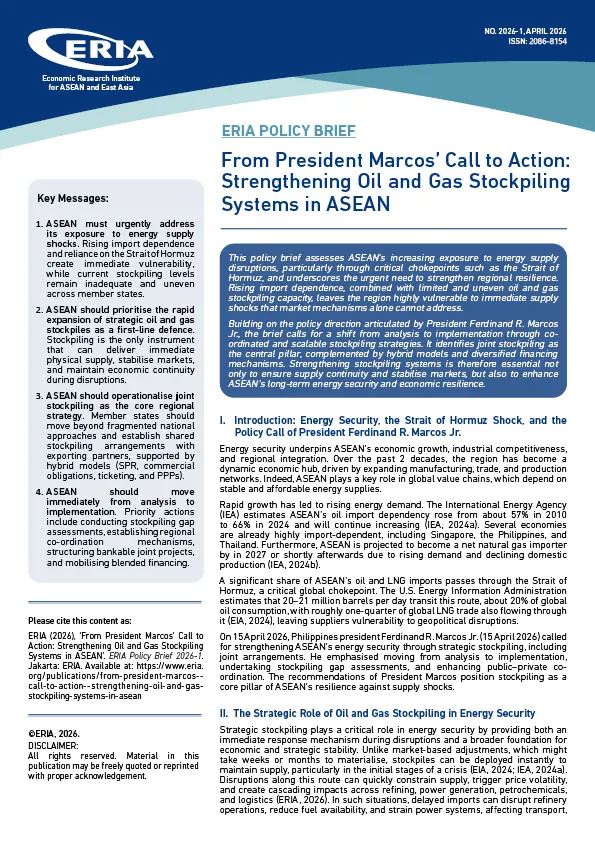
From President Marcos’ Call to Action: Strengthening Oil and Gas Stockpiling Systems in ASEAN
This policy brief assesses ASEAN’s increasing exposure to energy supply disruptions, particularly through critical chokepoints such as the Strait of Hormuz, and underscores the urgent need to strengthen regional resilience. Rising import dependence, combined with limited and uneven oil and gas stockpiling capacity, leaves the region highly vulnerable to immediate supply shocks that market
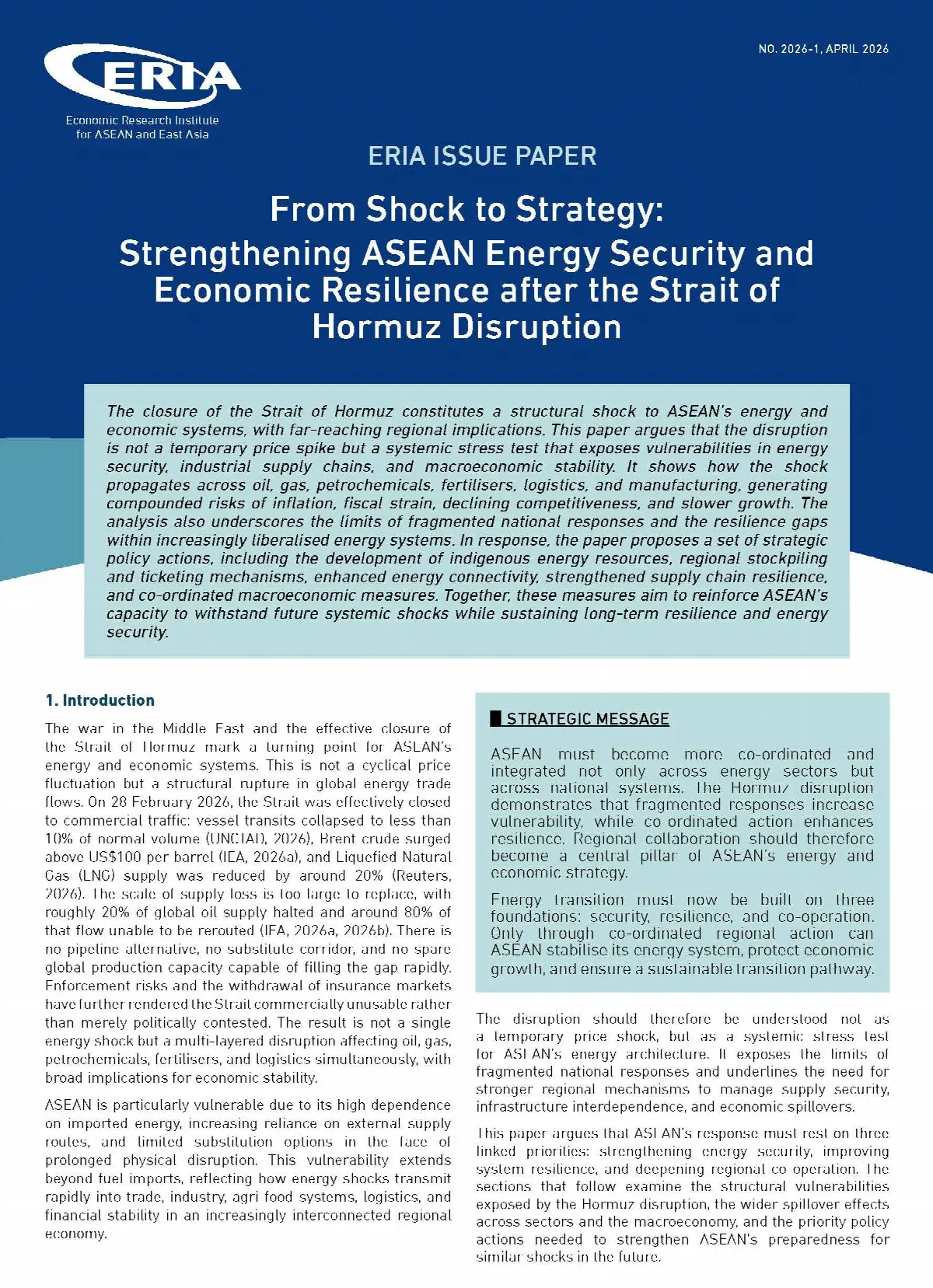
From Shock to Strategy: Strengthening ASEAN Energy Security and Economic Resilience after the Strait of Hormuz Disruption
The effective closure of the Strait of Hormuz in February 2026 represents a structural rupture in global energy trade flows with far-reaching implications for ASEAN economies. This paper argues that the disruption is not a temporary price shock but a systemic stress test exposing deep vulnerabilities in ASEAN’s energy systems, supply chains, and macroeconomic stability.